How to Choose a Portable Camping Latern
How to Choose the Best Portable Camping Lantern for Family Camping Holidays and Power Outages
When you are planning a family camping holiday, lighting might not be the first piece of equipment you think about. You have probably spent time choosing the right tent, sleeping bags, camping chairs, cooking equipment and outdoor clothing. However, once the sun goes down, a good portable camping lantern can quickly become one of the most useful items you have packed.
A reliable lantern does much more than simply provide light. It can illuminate your family tent while you organise sleeping bags, light up the camping table while you prepare dinner, help children find their way around the tent at bedtime and provide a comfortable glow while everyone sits together in the evening. The same lantern can also become extremely useful at home if there is a power cut.
Modern LED camping lanterns have come a long way from the bulky gas lanterns and basic battery lights of the past. Today’s portable lanterns can be rechargeable, dimmable, solar-powered, water-resistant and even capable of charging a mobile phone. Some can provide hundreds of hours of low-level light, while others are designed to produce enough illumination for a larger campsite.
The challenge is knowing which features are actually important.
A lantern that looks impressive on a product page is not necessarily the best choice for a family camping trip. A huge lumen figure may sound attractive, but if the battery lasts only a few hours at that brightness, it may be less useful than a slightly less powerful lantern with a much longer runtime.
This guide explains exactly what to look for when choosing the best portable camping lantern for family camping, emergency lighting and power outages, including brightness, battery life, charging options, weather resistance, portability, safety and useful additional features.
Why Every Family Camping Trip Should Have a Good Lantern
There is an important difference between a torch and a lantern.
A torch produces a directional beam. This is excellent when you are walking to the campsite toilets, looking underneath the car or finding something in a dark corner.
A lantern, on the other hand, spreads light around an area.
That makes it particularly useful for family camping.
Imagine arriving at a campsite in the late afternoon and discovering that putting up the tent takes longer than expected. As daylight disappears, everyone is trying to find tent poles, sleeping bags and bags of clothing.
A lantern hanging inside the tent can illuminate the entire area while you work.
Later, when dinner is being prepared, you can place another lantern on the camping table. Instead of everyone relying on individual torches, the whole family has a shared pool of light.
When it is time for bed, the lantern can be turned down to a much softer setting.
This versatility is one of the biggest reasons portable LED lanterns have become so popular.
They are also extremely useful outside the campsite.
A good lantern can be stored in an emergency cupboard and used during a power cut. Unlike a phone, it does not need to be held in your hand. Unlike a torch, it can illuminate a whole room.
That means a single lantern can serve two purposes:
Camping equipment
Emergency household lighting
For families, that makes a good lantern a particularly practical purchase.
What Makes a Good Camping Lantern?
There is no single lantern that is perfect for everybody.
The best model depends on how you intend to use it.
A family who drives to a campsite and stays in a large tent may want a bright lantern with a large battery and USB charging.
Someone carrying all their equipment in a backpack will probably prioritise weight and size.
A household preparing for power cuts may be more interested in long runtime, replaceable batteries, solar charging or a hand-crank backup.
The most important features to consider are:
Brightness
Battery life
Dimming
Charging options
Weather resistance
Size and weight
Light colour
Durability
Ease of use
Additional emergency features
Let’s look at each one.
1. Understand Lumens Before Buying a Camping Lantern
One of the first specifications you will see when shopping for a lantern is the number of lumens.
Lumens measure the amount of visible light produced by a light source.
It is tempting to assume that more lumens automatically means a better lantern.
It doesn’t.
A 1,000-lumen lantern is not necessarily better than a 300-lumen lantern if you only need to illuminate a small tent.
For family camping, different brightness levels can be useful for different situations.
Around 50–150 lumens
This can be useful for:
Inside a small tent
Reading
Finding items
Children’s bedtime
Creating a gentle night light
Around 150–300 lumens
This is a useful range for:
Family tents
Cooking areas
Camping tables
General evening use
Larger tent interiors
Around 300–600 lumens
This is useful when you need more substantial area lighting.
It can work well for:
Larger tents
Camping kitchens
Outdoor seating areas
Group activities
Emergency lighting during a power cut
600 lumens and above
Very bright lanterns can be useful for large areas, outdoor work or emergency situations.
However, you probably won’t want to run a lantern at maximum brightness all evening.
The Goal Zero Lighthouse 600, for example, reaches 600 lumens and has a dramatically longer runtime when operated at lower brightness. Current testing also highlights the importance of considering runtime at the brightness you actually expect to use rather than simply looking at the maximum lumen figure.
The important lesson is simple:
Don’t buy a lantern just because it has the biggest lumen number.
Look at brightness options and runtime together.
2. Battery Life Is More Important Than Maximum Brightness
Imagine buying a lantern that produces an enormous amount of light but runs for only a couple of hours at full power.
That might be impressive for a short period, but it isn’t particularly useful if your family is camping for several nights.
This is why battery runtime is one of the most important specifications to investigate.
Manufacturers normally provide several runtime figures because the battery lasts much longer at lower brightness.
For example, a lantern might provide:
Several hours at maximum brightness
A full evening at medium brightness
Dozens or even hundreds of hours at its lowest setting
This is exactly what you want.
You don’t need your lantern running at maximum brightness while your family is sitting around chatting.
A low or medium setting may provide plenty of illumination while conserving battery power.
For an emergency lantern, a very long low-power runtime can be particularly valuable. Current lantern testing emphasises that the low or eco mode can be more important during a prolonged outage than the maximum brightness setting.
A useful rule
When comparing lanterns, ask:
“How long will this lantern actually run at the brightness I am likely to use?”
Don’t simply compare the maximum runtime advertised on the box.
3. Choose a Lantern With Adjustable Brightness
Adjustable brightness is one of the most useful features for family camping.
You might need completely different levels of light throughout the evening.
For example:
6:00 pm: Maximum brightness while setting up camp.
7:00 pm: Medium brightness while eating dinner.
8:30 pm: Lower brightness while playing cards.
10:00 pm: Soft light inside the tent while the children get ready for bed.
A lantern that allows you to control brightness means you can adapt it to every situation.
It also saves battery power.
A dimmer is therefore not simply a convenience feature. It can significantly improve the practical usefulness of your lantern.
4. Rechargeable or Battery Powered: Which Is Better?
This is one of the biggest decisions when choosing a camping lantern.
There are advantages to both rechargeable and replaceable-battery models.
Rechargeable Lanterns
Rechargeable lanterns are particularly convenient for regular camping.
You can charge the lantern before leaving home and start your trip with a full battery.
Many rechargeable lanterns can be charged through USB, meaning you may be able to recharge them from:
A wall charger
Car USB port
Portable power bank
Portable power station
Solar panel
Some models also provide USB output so the lantern can charge a phone or another small device.
The Goal Zero Lighthouse 600 is a good example of a multi-purpose design, combining rechargeable power with a USB power hub and hand-crank capability.
Battery-Powered Lanterns
Traditional battery-powered lanterns have one major advantage:
You can carry spare batteries.
This can be extremely useful during a prolonged power cut.
If your rechargeable lantern becomes completely flat, you need another source of electricity to recharge it.
With a battery-powered model, spare batteries can be stored in an emergency kit.
This is particularly useful if you are buying a lantern primarily for emergency preparedness rather than regular camping.
The Best Solution?
For a family who camps regularly and also wants emergency lighting, having more than one type can make sense.
For example:
Main lantern: Rechargeable
Backup lantern: Battery-powered
That gives you convenience while camping and redundancy during an emergency.
5. Consider Solar Charging
Solar charging can be an attractive feature for camping.
If you are spending several days away from mains electricity, being able to use sunlight to replenish your lantern can be useful.
However, solar charging should be viewed as a backup rather than something you completely depend upon.
Why?
Because camping weather isn’t always predictable.
A sunny summer afternoon could provide plenty of charging opportunity.
A wet, cloudy British weekend might provide very little.
Some current lanterns combine rechargeable batteries with solar charging, while others add hand-crank charging as another backup.
USB rechargeable + good battery life
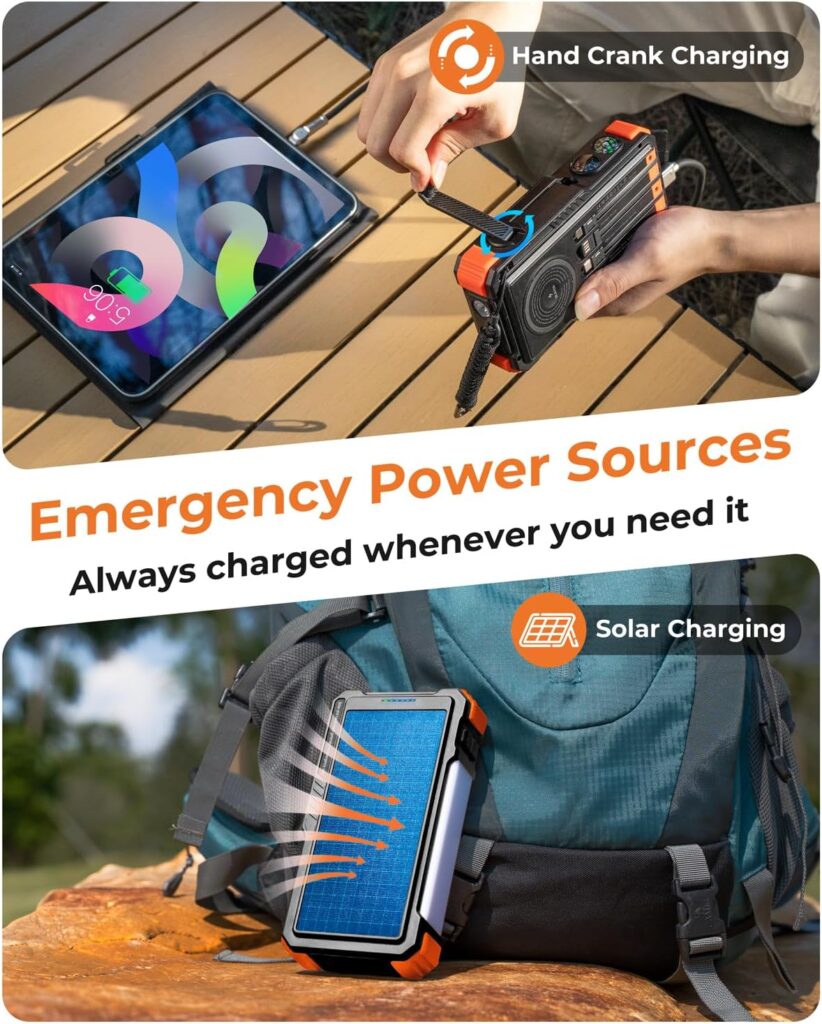
BLAVOR Solar Power Bank with Hand Crank and Built-in 4 Cables 20000mAh
Upgraded Hand Crank Power Bank: BLAVOR solar charger power bank features cutting-edge technology to combine a solar charger and hand crank generator in one. Simply rotate the handle to produce instant power anytime. With one minute of cranking, you get up to five minutes of reliable emergency lighting, perfect for power outages, camping, hiking, or outdoor adventures.
Simultaneously Charge 7 Devices: BLAVOR solar powered power bank with 4 built-in cables supporting charging up to 7 devices at the same time. No need to carry output and input charging cables.
Multifunctional Design for Outdoors: BLAVOR solar battery pack equipped with flashlight & camping lantern, plus essential survival tools compass, thermometer, carabiner, and rope.
Massive Capacity & Fast Charging: BLAVOR solar battery bank has a massive 20000mAh battery, can charge your iPhone 17 up to 4.1 times, Galaxy S24 Ultra 3.6 times, or iPad Mini 6 2.7 times. Equipped with a 20W PD USB-C fast charging port, it powers your devices up to 3× faster than standard power banks, and can be taken on airplanes as carry-on baggage.
6. A Hand Crank Can Be Valuable During a Power Cut
Hand-crank lanterns are particularly interesting for emergency use.
Imagine a power cut lasting longer than expected.
Your lantern battery eventually becomes empty.
There is no electricity available to recharge it.
A hand crank gives you another option.
It won’t necessarily provide hours of bright light without effort, but it can provide enough power to keep the light operating when you need it most.
The Goal Zero Lighthouse 600, for example, combines rechargeable power with a hand-crank charging option, making this type of lantern particularly suitable for emergency preparedness.
For camping alone, you may not consider this essential.
For a household emergency lantern, however, it can be a very useful feature.
7. Look for Water Resistance
Anyone who has camped in Britain knows that weather can change quickly.
Your lantern may be sitting on a picnic table when rain arrives.
It may be carried into a damp tent porch.
It may be dropped onto wet grass.
This makes water resistance an important consideration.
Look for an IP rating where one is provided.
A product described as splash resistant can be much more suitable for outdoor use than a lantern designed purely for indoor environments.
Don’t assume that because something is sold as a “camping lantern” it is automatically waterproof.
Always check the manufacturer’s specification.
A lantern with good weather resistance is particularly valuable for family camping because children aren’t always careful about where equipment gets placed.
8. Think About the Size and Weight
A lantern doesn’t need to be enormous to be useful.
In fact, portability is one of its biggest advantages.
If you are travelling by car, you have more freedom to choose a larger lantern with a bigger battery.
If you’re carrying equipment on foot, size and weight become much more important.
Consider where the lantern will actually be used.
Small lanterns
Best for:
Small tents
Backpacking
Children’s sleeping areas
Personal use
Emergency drawers
Medium lanterns
Best for:
Family tents
Camping tables
General campsite use
Car camping
Large lanterns
Best for:
Large family tents
Outdoor cooking
Group camping
Larger areas
Emergency household lighting
A useful feature is a folding or integrated handle.
This makes it easier to carry the lantern around the campsite or hang it inside your tent.
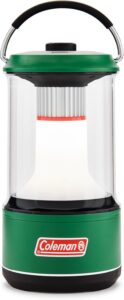
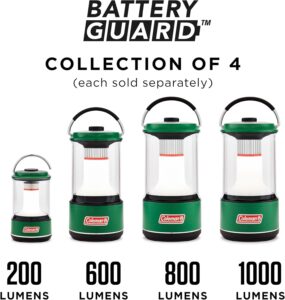
Coleman LED Lantern with Enhanced Battery Protection, Water-Resistant
BatteryGuard Technology: Preserves battery life and prevents corrosion.
Extended Battery Life: Lantern can hold batteries for years without power drain.
4 Adjustable Light Modes: High, medium, low, and flashing modes.
Powerful Illumination: Up to 1000 lumens, with a beam distance of up to 16 meters.
Water and Impact-Resistant: Withstands inclement weather and impact up to 2 metersLifetime LED Bulbs: Never need to replace the LED bulbs.
3-Year Limited Warranty: Ensures quality and durability.
9. Choose Comfortable Light for Family Camping
Brightness isn’t everything.
The quality and colour of the light can make a surprisingly big difference.
Some lanterns produce a cool white light that resembles daylight.
This can be excellent when you need to see clearly while cooking or organising equipment.
However, cool white light can feel harsh when you are relaxing in the evening.
A warmer light can create a much more comfortable atmosphere.
This is particularly useful when children are getting ready for bed.
Some modern lanterns allow you to switch between warmer and cooler light settings. The BioLite AlpenGlow 500, for example, is noted in current UK camping guidance for adjustable warm and cool light, making it particularly suitable for shared family camping areas.
If you want one lantern to do everything, adjustable colour temperature can be a worthwhile feature.
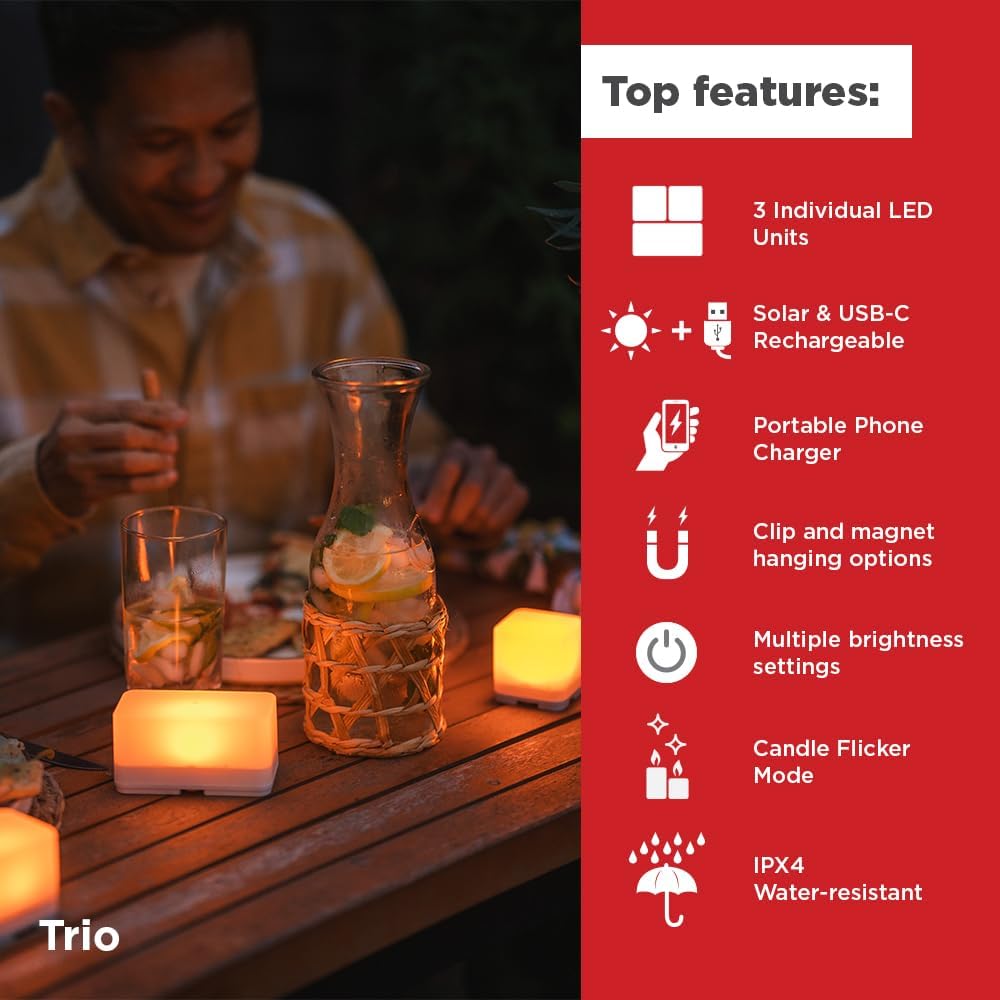
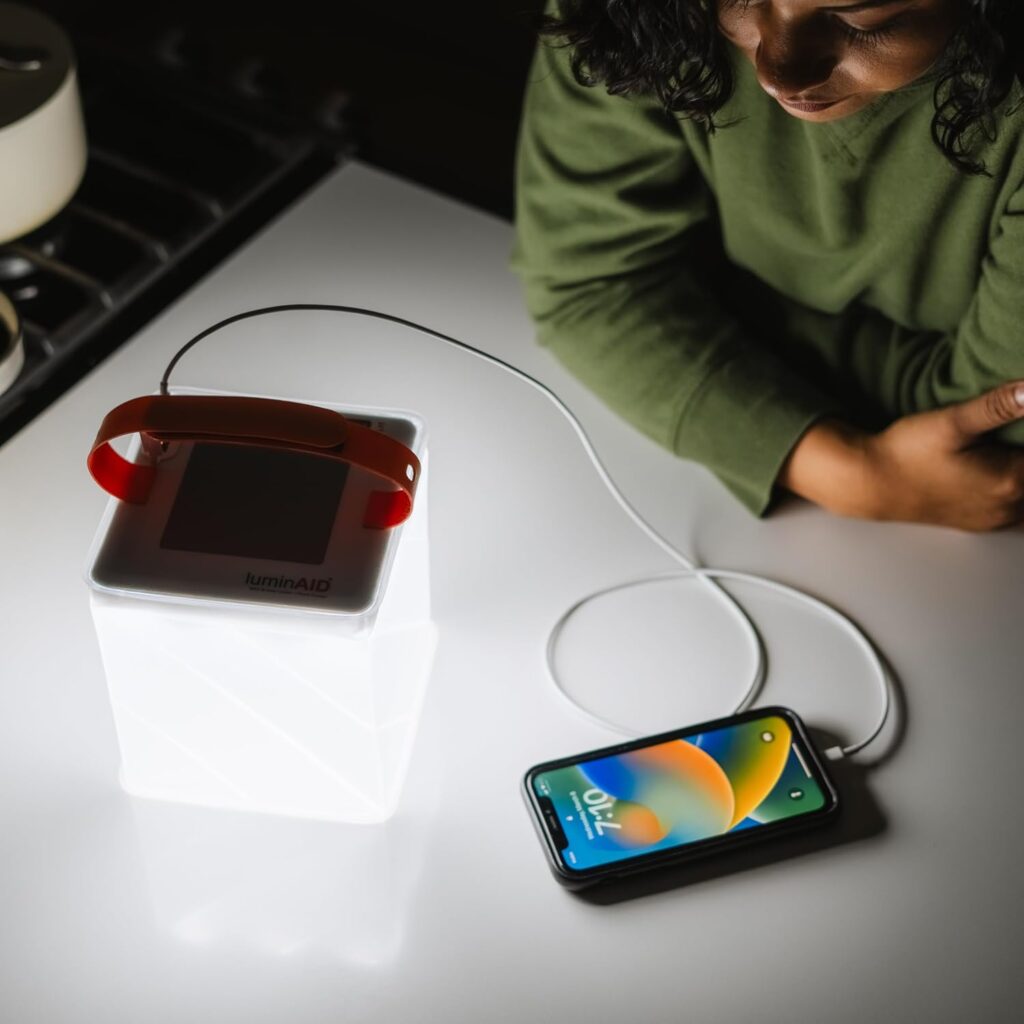
LuminAID Trio Solar Cube LED Laterns with Phone Charger Water Resistant
3-IN-1 DESIGN – Includes 3 detachable LED units that connect to a shared solar docking station for seamless recharging. Use individually for customized lighting or combine for a full lantern setup, perfect for any adventure or home setting.
DUAL COLOR MODES & MULTIPLE SETTINGS – Switch between cool white and warm white light modes with a simple double-click. Each unit features 3 brightness levels and a candle flicker mode, ideal for indoor ambiance or outdoor activities.
SOLAR POWERED WITH PHONE CHARGER – Equipped with a 2000 mAh battery in the rectangular unit, this solar lantern doubles as a portable power bank to charge phones and other small devices on the go.
PERFECT FOR ALL OCCASIONS – Whether camping, hiking, hosting outdoor gatherings, or preparing for emergencies, these versatile lanterns provide reliable lighting with a lightweight, compact design.
DURABLE & WEATHER RESISTANT – Made with high-quality, rugged materials to withstand tough conditions. Designed for indoor and outdoor use, the LED units are perfect for any environment.
10. Consider a Lantern That Can Charge Your Phone
This is one of the most useful modern features.
Some camping lanterns include a USB output that allows you to use the internal battery as a power bank.
This can be extremely useful if you are camping away from electrical hookups.
Your phone may be needed for:
Emergency calls
Navigation
Weather updates
Booking information
Contacting family
Taking photographs
A lantern that can provide emergency phone charging gives you another reason to keep it in your camping equipment.
However, remember that charging a phone will consume some of the lantern’s battery.
For this reason, a power-bank function should be viewed as an additional feature rather than the primary reason for choosing the lantern.
LuminAID Max 2-in-1 Inflatable Solar LED Camping Lantern & Phone Charger
EXTRA BRIGHT SOLAR LANTERN – With 200 lumens of LED light and multiple brightness settings, including Turbo mode, this is the perfect indoor or outdoor light solution. Great for camping, hiking, emergency preparedness, garden/patio parties, picnics, fun in the pool, and more. Makes a perfect gift!
ULTRA-PORTABLE & COMPACT ALL-IN-ONE – This device is a solar powered phone charger, expandable camping lantern, and backup battery all in one. At less than 10 oz, this must-have camping essential is powerful but doesn’t weigh down your pack. Inflates to a 6″ cube and packs down to 1″ thick.
SOLAR OR USB RECHARGEABLE FOR CONTINUOUS LIGHTING – Fully recharges in 16-20 hours of direct outdoor sunlight (approximately 2-3 days depending on location and time of year) or in 1-2 hours by USB (cord included).
PHONE CHARGING – 5V, 2.1 Amp output port provides 75-100% battery charge for most smart phones (recharge times vary depending on phone type).
WATERPROOF, SHATTERPROOF & DURABLE – Made from heavy duty, rugged TPU to endure tough environments, our solar camping lights are 100% waterproof and dustproof (IP67 rated), and float on water when inflated.
11. Look for Simple Controls
This sounds obvious, but complicated controls can become irritating when you’re standing outside in the dark.
The best family camping lanterns should be easy to operate.
Look for:
Large buttons
Clearly marked controls
Easy brightness adjustment
Simple on/off operation
Battery indicator
Easy charging connection
This becomes particularly important during a power cut.
You don’t want to be searching through instructions to work out how to turn the light on.
A simple lantern that everyone in the family can operate is often better than a feature-packed model with complicated controls.
12. Choose Durable Construction
Camping equipment gets knocked around.
Your lantern may end up:
In the boot of the car
Under camping chairs
In a storage box
Dropped onto grass
Knocked off a table
Packed next to cooking equipment
Durability therefore matters.
Look for a lantern designed specifically for outdoor use.
A protective exterior, sturdy handle and quality construction can make the lantern much more useful over several camping seasons.
You don’t necessarily need the most expensive model.
You simply want something designed to cope with being transported and used outdoors.
13. Think About Safety Around Children
Family camping creates an additional consideration: children.
Traditional flame lanterns can become hot and require fuel.
Modern LED lanterns are generally much easier to manage around a family campsite because they don’t require an exposed flame.
A cool-running LED lantern can be used inside a tent or placed on a camping table without the same concerns associated with an open flame.
Of course, children should still be taught not to play with camping equipment or charging cables.
Keep lanterns stable and positioned where they cannot easily be knocked over.
For tents, always follow the manufacturer’s safety instructions and avoid placing electrical equipment where it could create a trip hazard.
14. What Is the Best Brightness for a Family Tent?
There isn’t one perfect number because family tents vary enormously in size.
For a small two-person tent, a compact lantern may be enough.
For a large family tent with several sleeping areas, you’ll probably want something considerably brighter.
A practical approach is to think about the areas you need to illuminate.
You might have:
Sleeping area: 50–150 lumens
Living area: 150–300 lumens
Cooking area: 300+ lumens
Large outdoor area: 500+ lumens
Remember that these are practical guidelines rather than strict rules.
A lantern with adjustable brightness is preferable because it allows you to adapt the output rather than buying several different lanterns.
15. Don’t Forget a Backup Light
Even if you buy an excellent lantern, don’t rely on a single light source.
A family camping kit should ideally include several forms of lighting.
For example:
Main lantern
Provides general campsite lighting.
Headlamp
Provides hands-free directional lighting.
Small torch
Useful for walking around the campsite or finding something quickly.
Backup lantern
Provides additional lighting if the main lantern fails.
This approach is also useful during a household power cut.
If the electricity goes off, everyone having access to some form of personal lighting is much safer than having one lantern sitting in the middle of the house.
Best Portable Camping Lanterns to Consider
There are many lanterns on the market, and specifications can change between versions. The following options are worth considering because they cover different needs.
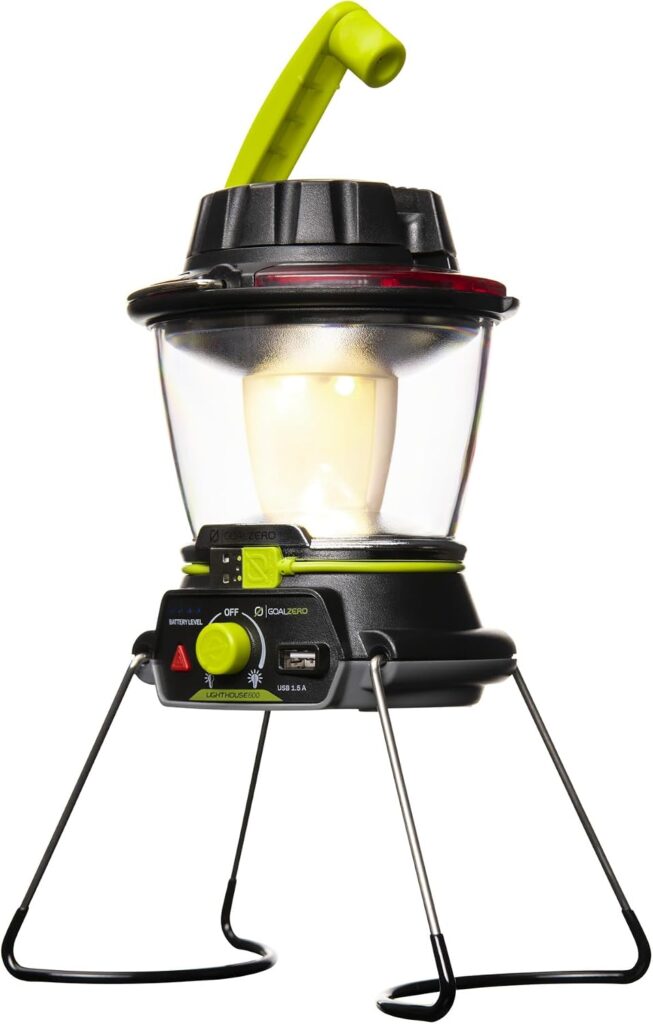
Goal Zero Lighthouse 600
The Goal Zero Lighthouse range is particularly interesting for campers who want a lantern that can also function as emergency equipment.
The Lighthouse 600 is rated at up to 600 lumens and offers rechargeable power, USB output and hand-crank charging. Current independent testing has rated it highly for both camping and emergency use.
Best for:
Family camping
Emergency preparedness
Power cuts
Larger tents
People who value multiple charging options
Its biggest advantage is versatility.
Rather than being simply a light, it can become part of a wider emergency kit.
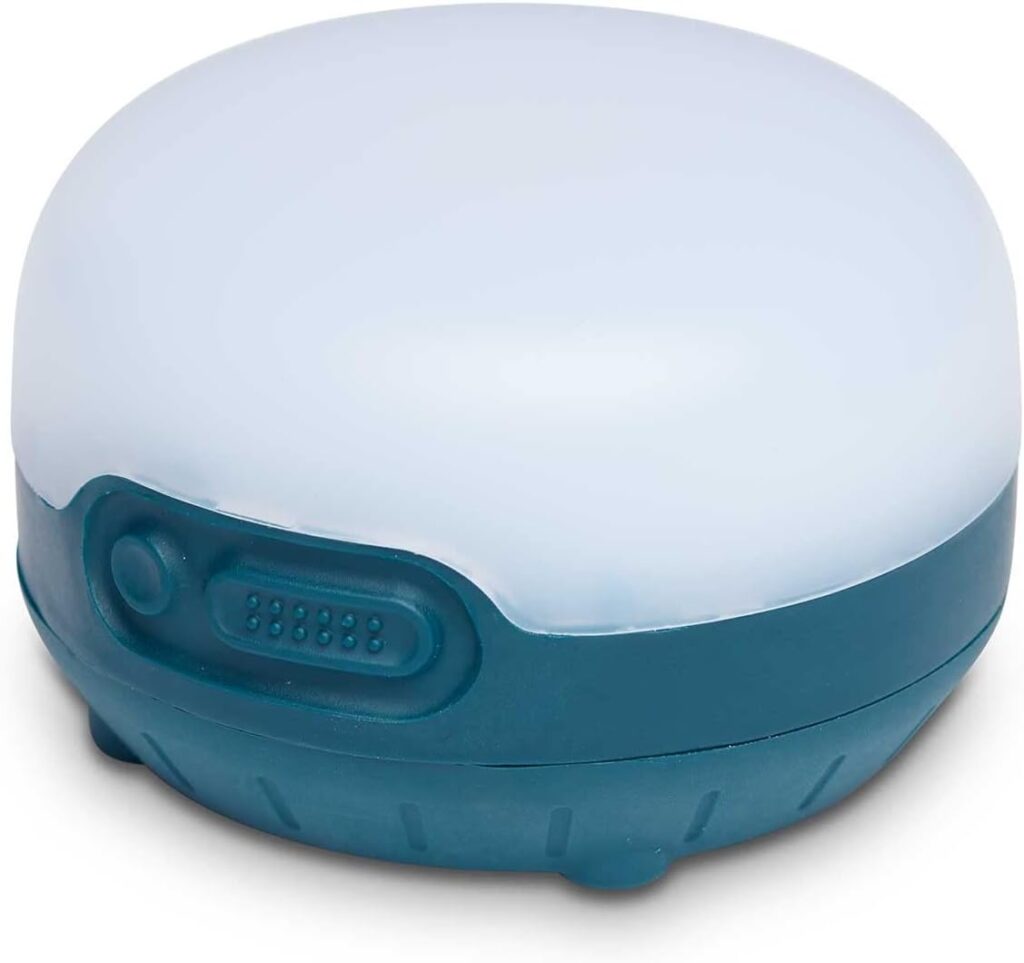
Black Diamond Moji R+
The Black Diamond Moji R+ is a compact option for campers who don’t want to carry a large lantern.
It is particularly well suited to smaller camping setups, tent interiors and people who value portability.
Black Diamond’s Moji range is also popular because of its simple design and compact format. Current camping tests continue to include the Moji R+ among recommended lantern options.
Best for:
Small tents
Couples
Family members who need personal lighting
Compact camping kits
Backup lighting
It would make a good secondary lantern even if your main family campsite uses something larger.
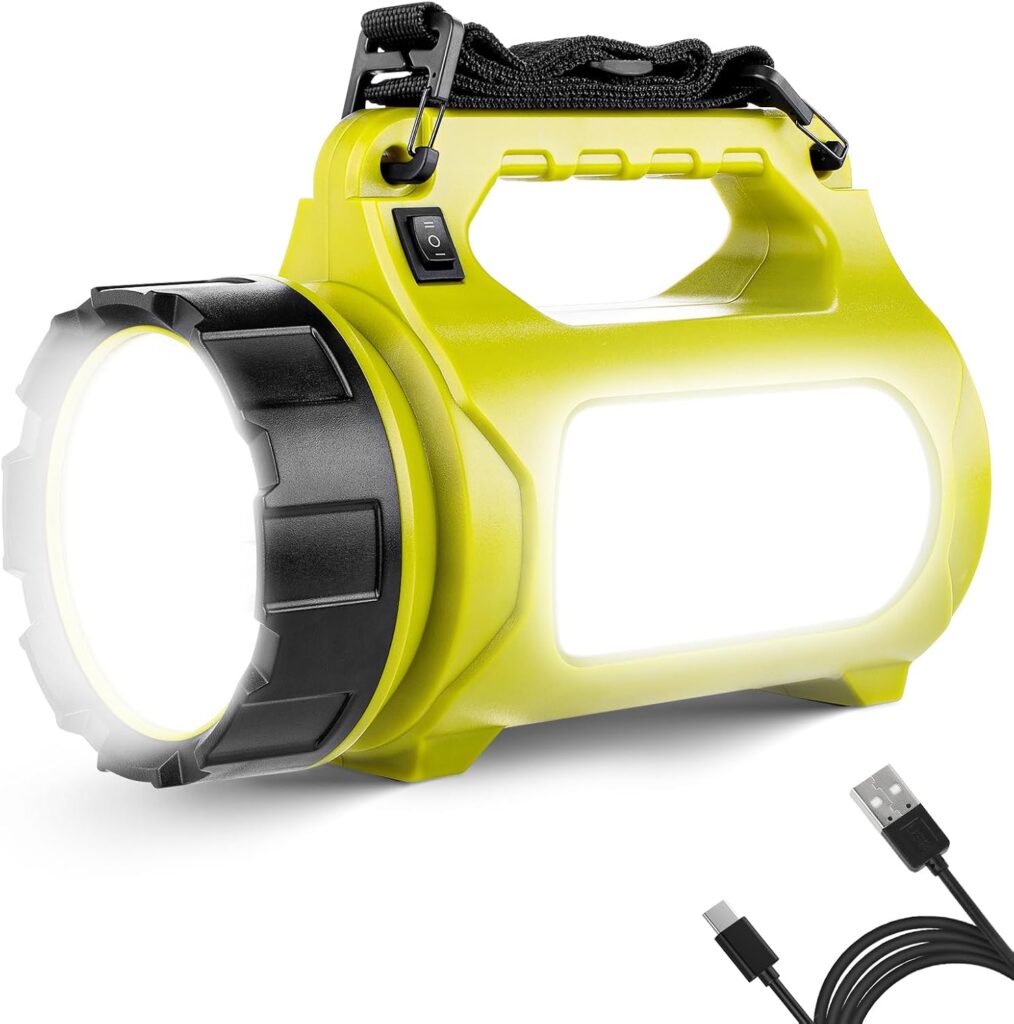
LE Rechargeable Camping Lantern
For families looking for a more affordable rechargeable option, the LE rechargeable lantern is worth investigating.
It provides a straightforward camping-lighting solution without requiring the investment associated with some premium outdoor brands.
Best for:
Budget-conscious campers
Family camping
Emergency lighting
General household use
A secondary lantern
For a family, having two reasonably priced lanterns can sometimes be more practical than spending the entire budget on one premium model.
Lepro 1000LM Rechargeable Camping Lantern
If brightness is high on your priority list, this type of 1,000-lumen rechargeable lantern can be useful for larger family camping areas.
Best for:
Large tents
Camping tables
Outdoor cooking
Power-cut lighting
Families who need a brighter central light
Remember, however, that maximum brightness should not be the only factor you consider.
Always look at runtime, charging method and lower brightness settings as well.
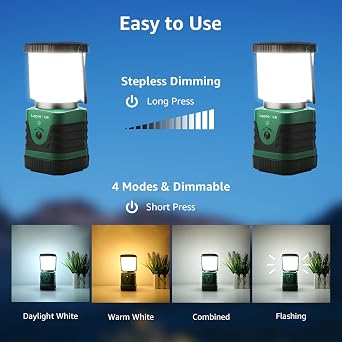
Lepro Camping Lights
For a simple family camping setup, smaller battery-powered camping lights can be useful as additional lights around the tent.
These can be particularly handy when you don’t want to use your main lantern for every little task.
Best for:
Children’s sleeping areas
Tent entrances
Additional ambient lighting
Backup lighting
Rather than trying to make one lantern do everything, several smaller lights can make a family campsite easier to manage.
What Type of Lantern Is Best for a Power Cut?
If your main reason for buying a lantern is emergency preparedness, your priorities should change slightly.
You should look for:
Long low-level runtime
Simple controls
Reliable battery
Rechargeable or replaceable battery options
USB charging
Solar charging if possible
Hand-crank charging if possible
Power-bank capability
Good durability
Stable base
Good room illumination
The ideal emergency lantern doesn’t necessarily need to be the brightest.
Instead, it needs to keep producing useful light for as long as possible.
During a short power cut, almost any decent rechargeable lantern may be sufficient.
During a prolonged outage, battery management becomes much more important.
This is why an adjustable lantern with a very low-energy setting can be extremely useful.
How Many Lanterns Does a Family Need?
For a family camping holiday, I wouldn’t recommend relying on one lantern.
A better setup might be:
1 main lantern
For the family living area.
1 smaller lantern
For the sleeping area.
1 lantern or light
For the cooking area.
1 headlamp per person
For walking and hands-free tasks.
You don’t necessarily need to buy all of these at once.
Start with one good main lantern and gradually build your camping lighting kit.
Where Should You Put Your Lantern?
Placement makes a surprising difference.
Putting a lantern directly on the ground can create shadows and make it harder to see.
Instead, consider positioning it:
On a camping table
Hanging from a tent loop
From a suitable hook
On a stable raised surface
If the lantern has a diffuser, raising it can help spread light more evenly.
Inside a tent, hanging the lantern from the central point can often illuminate the space better than placing it beside someone’s sleeping bag.
Just make sure the lantern is securely attached and that its weight is appropriate for the tent loop.
How to Make Your Lantern Battery Last Longer
There are several easy ways to extend battery life.
Use the lowest useful brightness
You don’t need maximum brightness for reading or relaxing.
Turn the lantern off when nobody needs it
It sounds obvious, but lanterns are often left running unnecessarily.
Use separate lights for walking
Don’t carry your main campsite lantern around if a small torch or headlamp will do the job.
Recharge whenever convenient
If you’re staying at a campsite with electrical hookups, take advantage of them.
Carry a power bank
A portable power bank can provide another way to recharge USB equipment.
Keep a backup
Never assume one battery-powered device cannot fail.
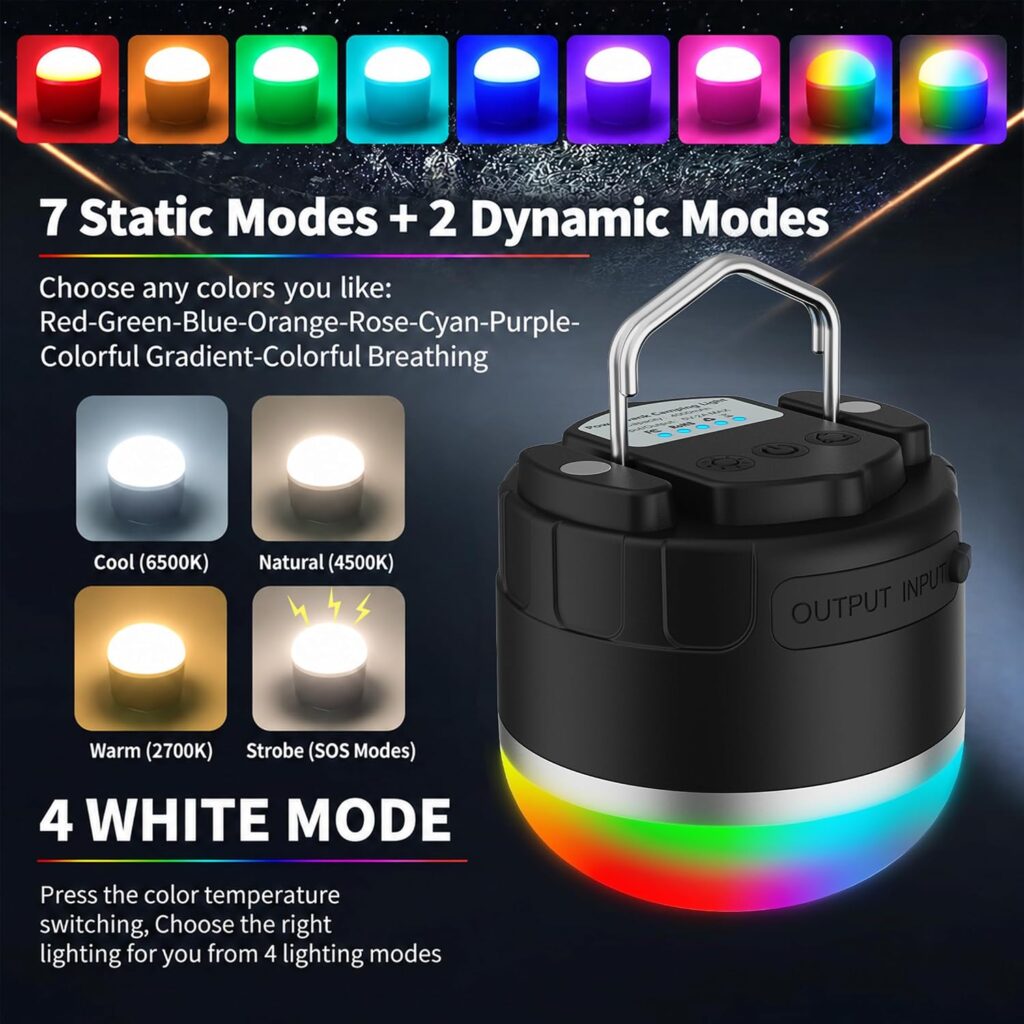
What About Colour-Changing Camping Lanterns?
Some modern lanterns offer coloured lighting.
This can be fun for families, particularly when camping with children.
However, I would treat colour-changing modes as a bonus rather than an essential feature.
The features that matter much more are:
Brightness control
Battery life
Durability
Weather resistance
Charging
Portability
Once those are covered, additional features can make the lantern more enjoyable.
Common Mistakes People Make When Buying Camping Lanterns
Mistake 1: Choosing the highest lumen number
More light isn’t always better.
Choose the right brightness for the space you are lighting.
Mistake 2: Ignoring runtime
A lantern that looks fantastic on maximum brightness may have disappointing battery life.
Mistake 3: Forgetting charging
Make sure you know exactly how the lantern is recharged before taking it camping.
Mistake 4: Assuming it’s waterproof
Check the actual rating.
Mistake 5: Buying only one light
A backup is always sensible.
Mistake 6: Forgetting spare power
If everything you own is rechargeable, think about how you will recharge it away from home.
Mistake 7: Buying a lantern that’s too large
If you have limited packing space, a compact model may be much more practical.
A Simple Camping Lantern Buying Checklist
Before purchasing, ask yourself these questions:
Where will I use it?
Inside a tent, around a campsite, at home during power cuts, or all three?
How much brightness do I need?
Small tent lighting requires much less output than a large outdoor cooking area.
How long should it run?
Look at the runtime at the brightness you actually expect to use.
How will I recharge it?
USB, batteries, solar, hand crank or a combination?
Does it need to charge my phone?
If yes, look for USB power-bank functionality.
Will it get wet?
If you’re camping outdoors, weather resistance is important.
How portable does it need to be?
Car campers have more flexibility than backpackers.
Will children be using it?
Choose something simple and robust.
Do I have a backup?
If this is also your emergency light, having a second option is sensible.
The Best Lantern Setup for a Family Camping Holiday
If I were putting together a practical family camping lighting system, I would avoid trying to find one lantern that does absolutely everything.
Instead, I would create a small lighting system.
Main family lantern
Choose a rechargeable model with approximately 300–600+ lumens, adjustable brightness and good battery life.
This becomes the main light around the camping table and inside the family tent.
Smaller tent lantern
Choose a compact model for the sleeping area.
This allows you to keep the main lantern outside or in the living area.
Headlamps
Give each family member their own headlamp.
This is particularly useful for nighttime toilet trips and walking around the campsite.
Backup lantern
Keep a battery-powered or multi-charge lantern in your emergency kit.
This becomes useful during a power cut as well as on camping trips.
This approach provides much more flexibility than relying on a single light.
What I Would Look for in the Ideal Family Camping Lantern
If you are looking for one lantern that can handle both family camping and household power cuts, I would prioritise the following features:
Rechargeable battery
Convenient for everyday use.
At least moderate-to-high brightness
Something around 300–600 lumens gives you plenty of flexibility for many situations.
Multiple brightness settings
Essential for conserving battery.
Long low-power runtime
Extremely important for emergencies.
USB charging
Easy to recharge from multiple sources.
USB power output
Useful for emergency phone charging.
Water resistance
Important for British camping conditions.
Strong handle or hanging point
Useful inside tents.
Simple controls
Particularly important during emergencies.
Durable construction
Camping equipment gets knocked around.
Backup charging option
Solar or hand crank can provide additional security.
Final Thoughts: Choosing the Best Portable Camping Lantern
The best portable camping lantern isn’t necessarily the biggest, brightest or most expensive model you can buy.
The best lantern is the one that fits the way your family actually camps.
For a family camping holiday, look for a lantern that provides comfortable, adjustable light, has enough battery life to last through the evening and is easy to carry, hang and recharge. Weather resistance and durable construction are also important because outdoor conditions can be unpredictable.
If you also want the lantern to serve as emergency lighting during a power cut, look beyond brightness. Long low-level runtime, rechargeable batteries, replaceable batteries, solar charging, hand-crank charging and USB power-bank capabilities can all become extremely valuable when mains electricity isn’t available.
The Goal Zero Lighthouse 600 is particularly interesting if you want a versatile emergency and camping lantern, while the Black Diamond Moji R+ is a more compact option. Affordable rechargeable models such as LE and Lepro can also make sense for families who want practical lighting without spending a large amount of money.
Most importantly, don’t rely on just one source of light.
A good family camping setup combines a main lantern with smaller lights and headlamps. That way, everyone has the light they need, whether you’re cooking dinner, finding something inside the tent, walking to the campsite facilities or dealing with an unexpected power cut at home.
A quality lantern is one of those camping purchases that can easily become useful far beyond the campsite. Choose carefully, look at the complete specifications rather than just the headline lumen figure, and you’ll have a dependable piece of equipment that can provide light for family adventures and peace of mind when the electricity goes out.